


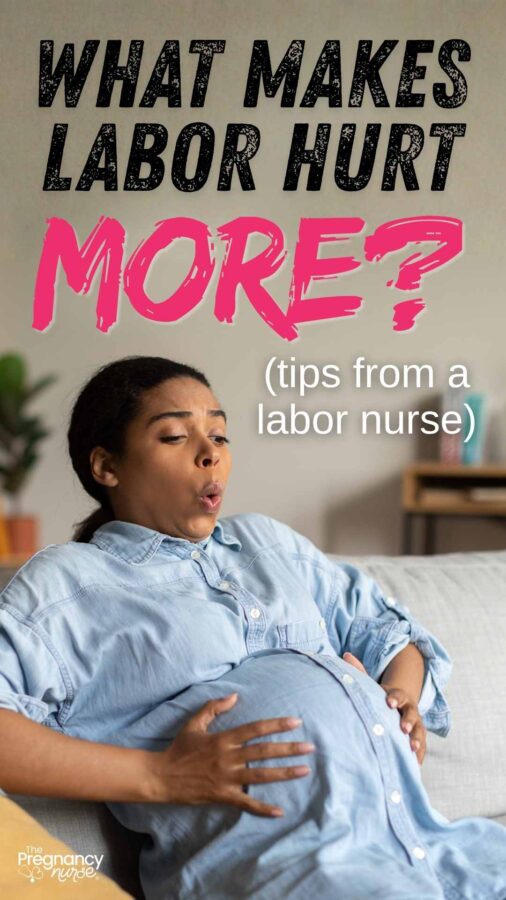
No one wants labor to hurt, but the reality is that it is quite painful (and this, coming from seeing thousands of people having a baby, almost no one looks as though it’s pain-free). But there ARE things that might make labor hurt more. Today I’ll share what they are, and what you can do help those things!
My Online Prenatal Class for Couples covers pain management options and how to handle whatever labor throws at you.
Anxiety
Being nervous ads a whole new layer of anxiety into labor.
Now, here’s the hard truth. Everyone’s going to walk in with some anxiety. It’s a big day. You’re not sure what will happen, or how your life will change after today (even if you’ve already had a baby).
But, a lot of couples walk in completely blind, very unprepared (and possibly even worse than unprepared if they’ve seen some social media clips that made things worse).
Be prepared makes birth better, because it removes anxiety.
Feeling anxious about labor is normal — but being prepared actually helps. My Online Prenatal Class for Couples is the best way to replace fear with confidence.
And because it’s normal to feel some anxiety, learning some breathing techniques can help this as well!
Want to know more about feeling less anxious? — check out these posts:
- The 3 Worst Ways People Prepare for Birth
- Labor Anxiety? These 3 Things Help You Feel in Control
- Why Labor Pain Can Feel So Different For Each Person
- Mistakes You’re Making That Makes Labor Longer
No Sleep
Being tired is the true arch nemesis of labor.
So many people run around freaking out in early labor when they could actually be sleeping. I totally get it, you’re like IT’S HAPPENING (insert meme here 😅). But, the more you can sleep in early labor, it’s going to be SO helpful as you get further into labor.
I also have some other pro tips like asking for a sleeping pill from your provider (like, literally one — and maybe only take half of it) if you’re in early labor and need to sleep. It can be tricky to calm your mind. This can be especially helpful with an induction. We all know third trimester sleep can feel hard to come by…
Someone reading about sleep in late pregnancy is clearly close to the end and starting to think “okay I need to get my act together.” A birth plan is a very natural “next step” feeling – it’s on every third trimester checklist and it triggers that same “I don’t want to go in blind” instinct.

Baby’s Position
How baby is facing in the womb can make a difference in how you feel labor.
While there are lots of positions baby can be in, the most commonly painful one is if baby is OP (occipit posterior — meaning baby is facing out rather than towards your spine). This puts that baby’s very hard head right into your tender back (that has already had a LOT of work to do this whole pregnancy).
Many people call this “back labor” — and there are techniques like being on all fours and swaying, along with counter pressure from a partner that can help with this.
The good news is that most babies turn after being in labor for a bit — and then you’ll feel the pain differently…
Not sure what to do if baby isn’t in the ideal position? I cover exactly that in my Online Prenatal Class for Couples.
Want to know more about baby’s position? — check out these posts:
- 3 Ways To Get Baby to Flip Head Down
- How to Tell if Your Baby is Head Down
- Once Baby is Head Down Can They Turn Again?
- 32 Weeks Pregnant Ultrasound: What will the scan be?
Being at the Hospital
Hospitals suck. There, I said it.
No one at the hospital is under the delusion that they are a fantastic place to be — and so much better than home. We know they’re loud, they often have alarms going off, and the freaking staff is coming in at all hours to bother you.
Some of you may have some trauma associated with hospitals (I sure do!).
Some of you may just feel like things are far too real (this is when that sleeping pill might help if sleep is even close to an option).
Hospitals just don’t promote sleep, they promote safety — and while we know how important sleep is, sometimes it’s just not our highest priority. Unfortunately.
Just understanding how the hospital runs is key here. It’s a different land with different customs, practices and language. It’s possible!
Get a peek behind the curtain before you arrive – my Online Prenatal Class for Couples is taught by an L&D nurse who’s seen it from both sides of the bed.
Previous Surgeries
If you’ve had abdominal surgery you might just feel labor pains differently.
Now, this isn’t just for my VBAC patients — it’s for anyone who’s had any type of uterine or cervical surgery. It can just create scar tissue that may have to “break” in order for baby to move into the pelvis.
If you’ve had surgery in the past I’d ask your provider what to expect from that as you head into this labor.
Past Trauma
Lots of feelings can be swept up when baby is headed towards an area where past trauma has happened. I’m so sorry you’ve had that, and it’s just not fair — but it’s important to know.
Honestly, getting some therapy before birth can help. Definitely knowing what could happen… both of those can be really helpful.
But, mostly just knowing it might happen can help a lot. Using tools you’ve got to help you deal with those emotions and feelings can help so much. I’m a big fan of those tools and they’ve helped me a lot in the past too.
Grab my free Positive Pregnancy Affirmations – a gentle tool for working through fear as you get closer to birth.

Everyone feels labor pain differently — but hopefully knowing these 5 things will help you feel a bit more prepared.
OH, one more:
Pro Tip: Never compare your labor pain to anyone else’s. It just isn’t helpful. It can’t actually be done and it ultimately just makes you feel worse about it. Take your labor as it comes.
Ready to feel truly prepared? My Online Prenatal Class for Couples covers everything you need to walk into that hospital feeling confident.
- About the Author
- Latest Posts

A nurse since 1997, she has worked in various fields including pediatrics, geriatrics & hospice. She has 20 years of labor and delivery experience in the San Jose, CA and Phoenix, AZ areas.
As an evidence-based prenatal educator Hilary has delivered thousands of babies and has educated hundreds of thousands of parents from a diverse patient population to help them have a confident birth.
 Epidural Side Effects After Birth