


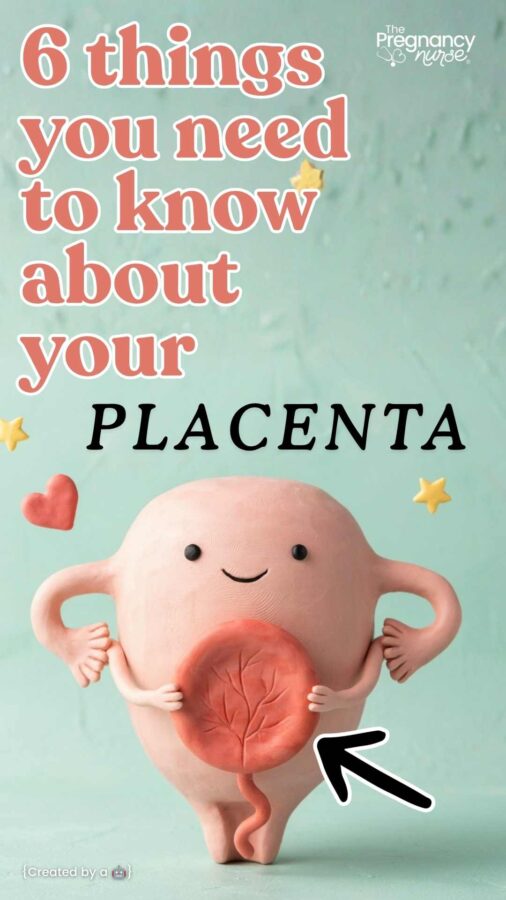
The placenta is an AMAZING organ that your body creates just for this pregnancy. Today I want to give it it’s due — and remind you a few things you should know about it. Honestly, have you ever thought that is truly the reason your baby is alive? It’s just a very cool thing. Let’s dive into it!
Location
The location of your placenta can change a few things:
Movement — If you have an anterior placenta you may feel your baby a little later. Some people say they feel less movement through the duration of their pregnancy – but most studies show that after about 24 weeks people feel their baby about the same as everyone else (although every pregnancy is different). This happens in about 33-50% of pregnancies (so, very normal).
I also have a youtube video on it you might find helpful:
Delivery Method – If you have a placenta previa (and you’d know it if you have it) that continues into your third trimester you’ll likely have to deliver via cesarean. A placenta previa is where the placenta covers your cervix. And, because it is keeping your baby alive, they can’t go through the cervix while it’s covering it.
MANY people have a placenta previa at early ultrasounds (even 20 weeks) but as the uterus grows, the placenta grows with it up the side walls of the uterus. A true placenta previa at delivery date only happens in about 1 in 200 pregnancies.
Want to know more cool things about pregnancy? — check out these posts:
- Pregnancy Pains That Are Actually Warning Signs
- What makes labor hurt more?
- If I had a Baby Again this is What I’d Do Different
- Charlie Horses in Pregnancy: What you can do to prevent them?
- Pregnancy, Tylenol® & Autism: What Expecting Moms Need to Know
It’s Disposible
It is meant to be thrown away — or eaten or buried if you’re an animal.
While you can 100% have your placenta from the hospital (we red bag and throw them away — don’t let anyone else tell you we’re selling them to cosmetic companies) — but eating your placenta (in anyway) does come with risks and the benefits aren’t proven. I have a post on eating your placenta here.
While we’re here, I also have a podcast episode on the placenta you might find interesting too!
Size Matters
While the placenta isn’t routinely measured, there are some new studies that are showing a correlation between extra large and extra small placentas being a risk factor for stillbirth or miscarriage.
You can ask for it to be measured (they may or may not do it) — it’s called EPV or estimated placental volume. It’s important to know that not all places have the experience to do it — but the more we ask for it, the more common it will be!
They’re just measuring the size of the placenta in comparison with the baby’s size and then if it’s too large/small then they can just watch it, and perhaps do some extra monitoring…
If you want more information on this check out Measure the Placenta.
Sometimes just KNOWING you have options is good to know – both in your placenta but also at delivery. I recommend this to know more about what options you have {and feeling prepared for them}.
That being said, my favorite way to prevent stillbirth is kick counts, and I have a cheat sheet on how to do them right here.

It’s a Filter
The placenta decides what does pass to the baby and what doesn’t. This includes medications, hormones, and more. You’ll hear it phrased — “it doesn’t cross the placenta” — meaning the placenta doesn’t pass it on to baby.
BUT, lots of things do pass to the baby, which is why you have to be super cautious about what you put in your body during pregnancy. {which often sucks}
It Has a Shelf Life
Just like your milk in the fridge, your placenta also has a shelf life.
We believe that 40 weeks is the approximate shelf life of the placenta (remember, it’s disposible). After that it has done it’s job and starts to shut down.
We’ll see calcifications on the placenta on babies who are born a while past their due date, and we believe it’s a big reason why the stillbirth rate rises after 40 weeks of pregnancy. I talk about that a bit more in this post.
Making the choice to be induced if you’re due or post dates can be tricky. I talk about induction in here because it is SO important to get the full picture before making your mind up (and there is also 3rd trimester testing we can do to see how baby is doing before you make a decision).
It Gives And it Takes
Your placenta not only gives your baby everything it needs:
- Oxygen (seriously, you are BREATHING for your baby — it’s amazing!)
- Nutrients
BUT it also takes away all the waste products from the baby (although they still pee their own amniotic fluid).
Honestly, the placenta doesn’t get it’s due. It really does a HUGE amount of work to keep that baby alive. I always took a picture of mine, because I was so grateful that it did do it’s job in there. Of course, I also let them toss it in the trash because it’s kind of gross too. 🙂
Pregnancy is just such a miracle. I want you feel prepared and confident for your delivery day, which is why I created this. It’s not a miracle to have a great birth >> preparation is the key!
Got other questions about the placenta? Let me know down below and I’ll do my best to answer!
- About the Author
- Latest Posts

A nurse since 1997, she has worked in various fields including pediatrics, geriatrics & hospice. She has 20 years of labor and delivery experience in the San Jose, CA and Phoenix, AZ areas.
As an evidence-based prenatal educator Hilary has delivered thousands of babies and has educated hundreds of thousands of parents from a diverse patient population to help them have a confident birth.
 Pregnancy Pains That Are Actually Warning Signs